
For players in Ireland, this guide explains playojo responsible gambling limits and how to self exclude PlayOJO in a clear, practical way. You’ll see how to manage deposits, take a break, and use account controls for safer play.
The best PlayOJO offers for UK players
Pick the one that suits how you like to play — slots, casino or live.
- Big Bass Bonanza, Gates of Olympus, Fishin' Frenzy in the lobby
- 1,000+ slots from Pragmatic Play, Play'n GO and NetEnt
- OJO Levels — collect rewards as you play
- Instant payouts straight to your bank card
- No wagering on bonus winnings — cash out instantly
- 2,500+ games: slots, table games, jackpots and instants
- Live casino, OJO Wheel and Friends & Family rewards
- PayPal, Apple Pay, Paysafe, Visa and Mastercard
- Live roulette 24/7 with English-speaking dealers
- Crazy Time, Monopoly Live and Dream Catcher game shows
- VIP blackjack and baccarat tables
- HD streaming with low latency on mobile and desktop
★ 4.7 / 5 — based on 1,247 UK player reviews
Safer gambling on PlayOJO means using tools that help you keep play within your own budget, time, and comfort level. I’ve put this guide together for readers in Ireland who want a plain-English overview of responsible gambling tools, including how to set limits, how to pause your account, and how to self exclude on PlayOJO if needed. The aim is simple: make it easier to stay in control before play starts feeling stressful, expensive, or difficult to stop.
Scroll to see your safer gambling tools
Overview of PlayOJO responsible gambling tools
PlayOJO gives players access to account controls designed to support safer gambling. In most cases, these tools are found in My Account or a similar safer gambling area. They are there to help you manage behaviour, not to punish or block normal entertainment use.
The main options usually include:
- deposit limits
- possible loss or spend controls
- time or session reminders
- cooling-off periods
- temporary breaks
- full self-exclusion
- access to account and play history
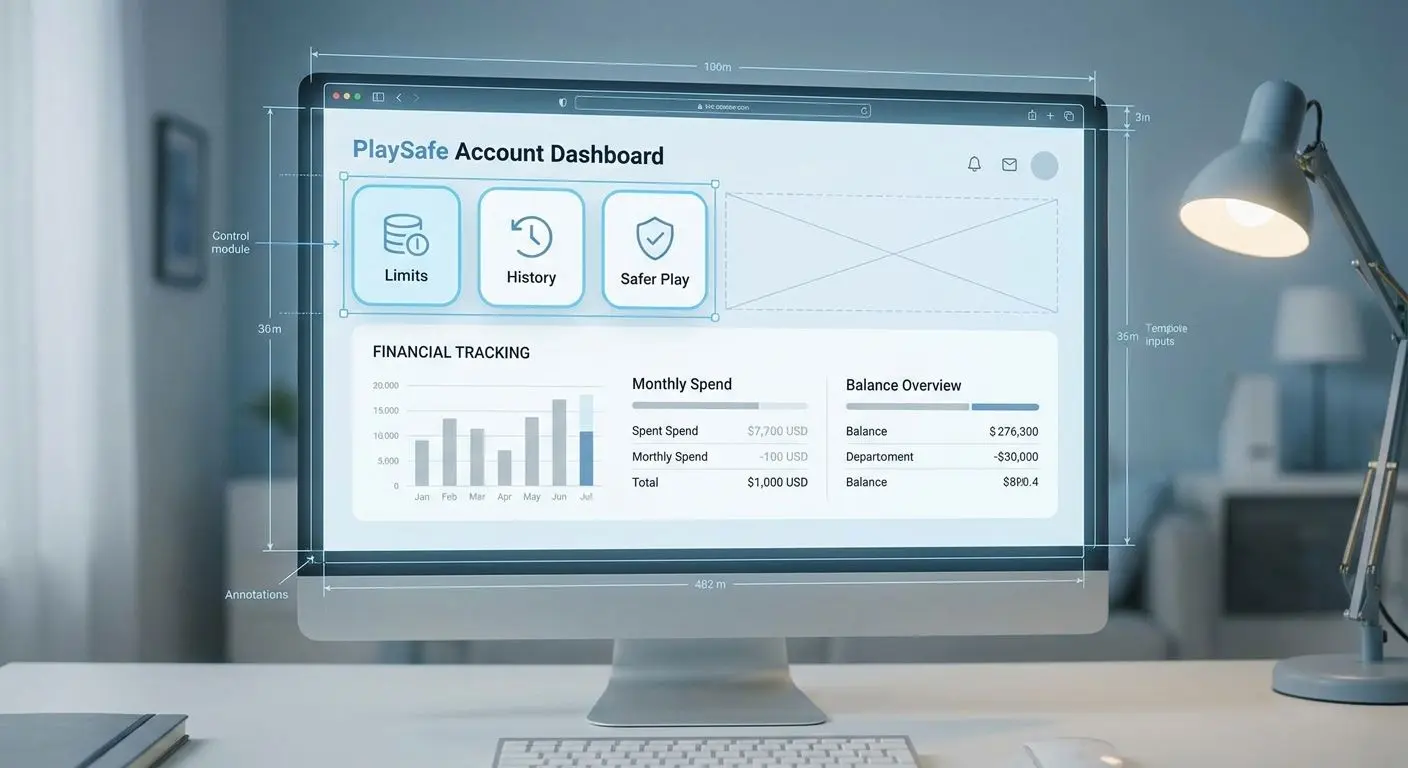
I recommend starting with the simplest controls first. A deposit cap and regular checks of your history already give you a much clearer view of your habits. If you also use the PlayOJO mobile casino options, it’s worth checking these settings on mobile too, as convenience can make spending and session time easier to overlook.
Deposit limits on PlayOJO
Deposit limits are usually the first tool I suggest. They control how much money you can add to your account over a chosen period, such as per day, per week, or per month. You may be able to set one period or combine several, depending on the account settings available.
The logic is straightforward. If you lower a limit, the change usually applies straight away or very quickly. If you try to raise a limit later, that increase normally takes effect only after a cooling-off period. That delay is there to reduce impulse decisions.
A deposit limit does not track wins or losses. It simply stops you from depositing above the amount you chose for that period. For many players, that makes it the most practical budget control.
A few useful ways to set it:
- base it on disposable entertainment money, not bills or essential spending
- choose a monthly figure first, then break it into weekly or daily caps
- keep the limit lower if you tend to top up several times in one session
- if you hit the cap often, treat that as a sign to reduce it rather than raise it
You can also review the PlayOJO welcome offer details with the same mindset, so bonuses don’t push you beyond your normal budget.
Go to your deposit limit settings
Other gambling limits: losses, wagers and time
Beyond deposits, some operators also offer other controls such as loss limits, wager limits, time limits, and reality checks. I describe these in general terms because exact availability can vary.
A loss limit is different from a deposit limit. A deposit limit controls how much you add to the account. A loss limit aims to control net losses over a set period. A wager limit focuses on the total amount staked, while a time or session limit helps cap how long you stay active.
Reality checks are another useful layer. These are reminders that appear during play and show how long you’ve been active, and sometimes how much you’ve spent or won. They are especially useful if you tend to lose track of time late in the evening or during long sessions.
Some of these tools may be set directly in your account, while others may require help from support.
Cooling-off periods and temporary breaks
A cooling-off period is a short pause from play, often ranging from a brief 24-hour break to several days. A temporary break or suspension is usually longer and may last for weeks. Both options are meant for players who want distance without choosing full self-exclusion.
Once active, these breaks generally stop real-money play and prevent new deposits. You may also lose access to some promotions during that period. Exact options and durations are normally shown in the safer gambling or safeguards section of your account.
I usually suggest a break when any of these signs show up:
- you feel more impulsive than usual
- you keep playing longer than planned
- you chase losses after a bad session
- your mood changes sharply because of results
If that sounds familiar, a short pause can help you reset before the pattern gets heavier.
Take a short break from playing
How to self-exclude from PlayOJO
Self-exclusion is a stronger step than a limit or a short pause. It is a voluntary restriction, but once activated it is meant to be firm. During the self-exclusion period, you should not be able to log in and play, make deposits, or simply open another account under the same details to continue as normal.
If you are searching for how to self exclude PlayOJO, the usual route is through My Account, then the safer gambling, limit settings, or safeguards area. If you cannot find the option, support can usually help you apply it correctly.
The process typically looks like this:
- Log in to your account.
- Open the safer gambling, limits, or safeguards section.
- Choose self-exclusion and select the available period.
- Confirm your choice and read the warning about the consequences.
Self-exclusion is designed for cases where play no longer feels controlled. It is not something to switch on and off casually. In practice, it cannot normally be cancelled instantly just because your mood changes later. When the period ends, the decision to return should be deliberate, not automatic.
Start self-exclusion in your account
Practical comparison of limits and breaks
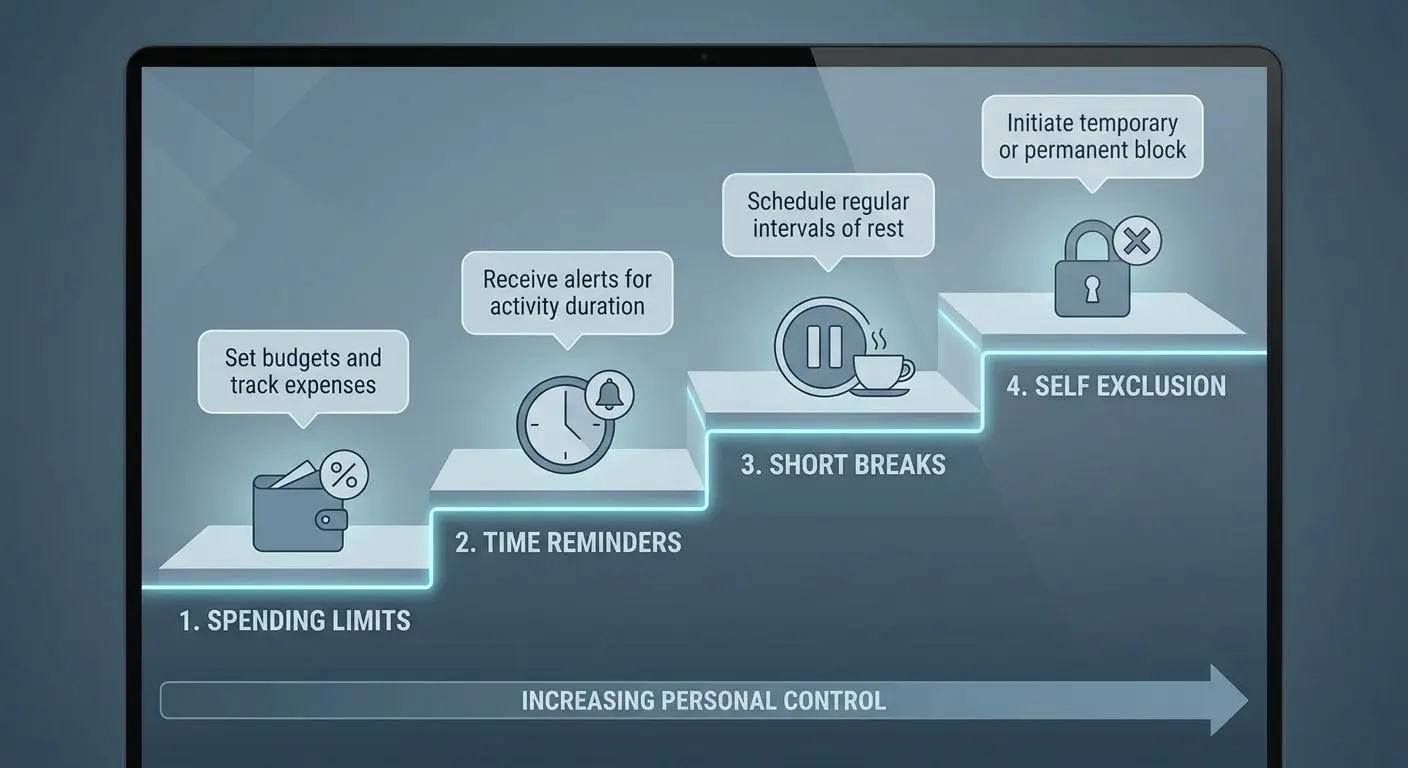
If your issue is overspending, a deposit limit is usually the first tool to try. If the bigger problem is session length, a time reminder or session cap may suit better. If emotions are running high and you need immediate distance, cooling-off or a temporary break makes more sense. If you feel out of control, self-exclusion is the stronger option.
Main safer gambling tools on PlayOJO
| Tool | What it controls | Typical duration |
|---|---|---|
| Deposit limit | Money added to the account | Daily, weekly, monthly |
| Loss limit | Net losses over a period | Daily, weekly, monthly |
| Time/session limit | Time spent in a session | Per session or per day |
| Reality check | Reminders about time and activity | During active play |
| Cooling-off | Short pause from account use | From short breaks to several days |
| Temporary break | Longer pause from play | Several days to weeks |
| Self-exclusion | Full account restriction | Long-term chosen duration |
Limits vs breaks vs self-exclusion – when to use what
| Situation | Recommended tool | Why it helps |
|---|---|---|
| Spending more than planned each month | Deposit limit | Caps account funding before overspend builds up |
| Playing late at night too often | Time/session limit or reality check | Makes session length more visible |
| Chasing losses after difficult sessions | Cooling-off | Creates immediate distance from impulsive play |
| Logging in repeatedly during stressful periods | Temporary break | Reduces access for a longer reset |
| Feeling out of control | Self-exclusion | Applies the strongest account restriction |
Changes to your limits
| Change type | When it takes effect | Good practice |
|---|---|---|
| Lowering a limit | Usually immediately | Reduce it as soon as spending feels high |
| Raising a limit | After a waiting period | Avoid raising it after a frustrating session |
| Starting a cooling-off | Usually immediately | Use it when you need fast distance |
| Starting self-exclusion | For the full chosen duration | Treat it as a serious long-term decision |
Tracking your play and getting help
Checking your play history and transaction history is one of the easiest ways to spot patterns early. I recommend looking at how often you log in, how much you spend across a week or month, and whether certain games or times of day lead to longer sessions.
Warning signs can include:
- spending affects everyday finances
- you hide play from family or friends
- you struggle to stop when you planned to stop
- you keep changing limits because they feel restrictive
- losses affect your mood for hours or days
If you notice these patterns, use limits or breaks straight away. If you need help finding the right setting, the PlayOJO support and contact options page is the quickest place to start. Extra safer play content may also appear on official brand channels: facebook.com/playojo, instagram.com/playojo, x.com/PlayOJO, youtube.com/@PlayOJO.
Featured slots
View All →








FAQ: Responsible gambling limits & self-exclusion on PlayOJO
How do I set responsible gambling limits on PlayOJO?
Log in, open My Account, and look for safer gambling, limits, or safeguards. That area typically includes deposit controls and may also include time reminders or break options. Lower limits usually apply quickly, while higher limits often activate only after a waiting period.
How do I self-exclude from PlayOJO?
Sign in to your account, go to the safer gambling or safeguards section, select self-exclusion, choose the available duration, and confirm. If you cannot find the setting or want help applying it properly, contact support and ask them to guide you through it.
What is the difference between limits, cooling-off and self-exclusion?
Limits are for control while keeping the account active, such as capping deposits or session time. Cooling-off is a short pause for immediate distance. Self-exclusion is a more serious long-term restriction that blocks normal access for the full selected period.
Can I change or cancel my self-exclusion on PlayOJO?
In general, self-exclusion is not something you can switch off instantly. The chosen period usually needs to run its course, and any later return tends to require confirmation. Exact rules can depend on operator policy and the account process in place.
What should I do if I still struggle with gambling after setting limits?
If limits are not enough, lower them again, consider a temporary break, or move to self-exclusion. It may also help to speak with someone you trust and contact PlayOJO support and contact options if you need help finding the right account controls or next step.
Gambling should stay a form of entertainment, not a way to make money. Only people above the legal age for gambling should use these services. If play starts to feel compulsive or hard to control, step back and use the available protection tools.